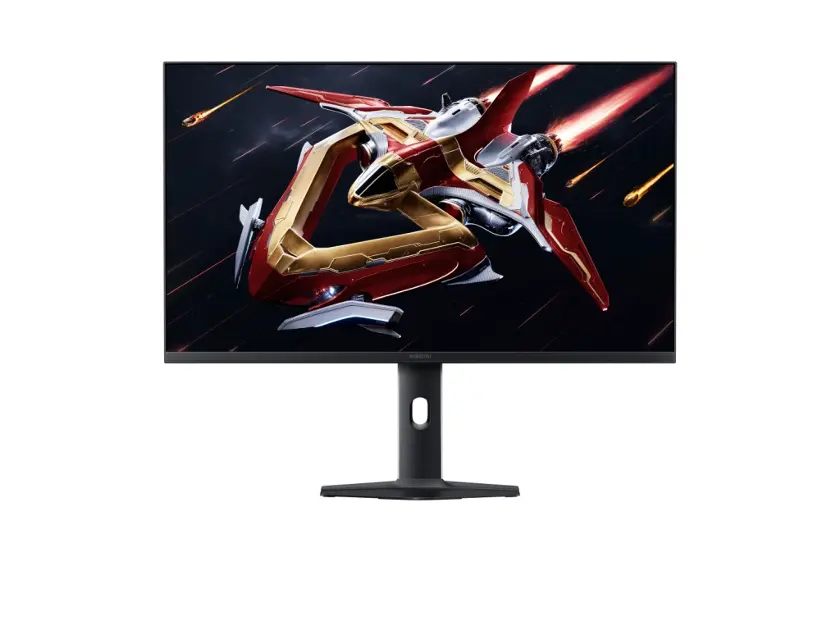
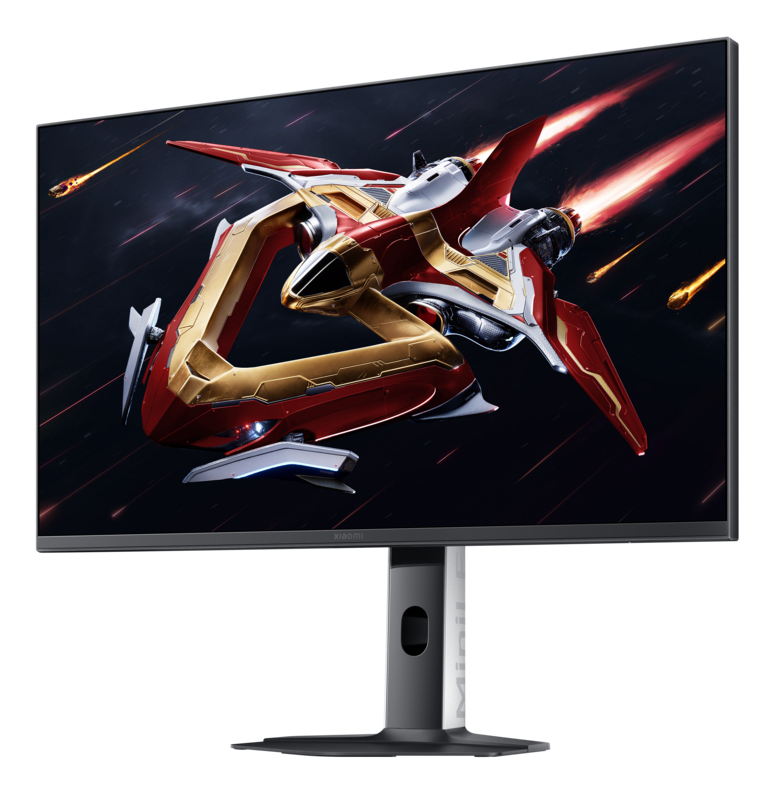
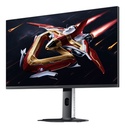

Xiaomi Mini LED Gaming Monitor G Pro 27Qi 2026 | 27" Fast IPS | 2560×1440 QHD | Mini LED 1,152 Dimming Zones + LocalDimming Algorithm + AI Scene Recognition | 180Hz | 1ms GTG | FreeSync VRR | 2,000-Nit Peak / ≥600-Nit Typical | HDR1000 | 0.0001 Nits Black Level | QD Wide Colour Gamut: 100% sRGB / 99% DCI-P3 / 99% Adobe RGB | 10-bit | ΔE<1 Factory Calibration | TÜV Low Blue Light | HDMI 2.0 ×2 + DP 1.4 ×2 | Height / Tilt / Swivel / Pivot Stand | Retractable Headphone Holder | 65W | 6.0kg | 2-Year Warranty
The Xiaomi Mini LED Gaming Monitor G Pro 27Qi 2026 is a 27-inch 2560×1440 Fast IPS gaming monitor combining Mini LED backlighting with 1,152 local dimming zones, a proprietary LocalDimming algorithm with AI scene recognition, 180Hz refresh rate, 1ms GTG response time, FreeSync variable refresh rate sync, 2,000-nit peak brightness, HDR1000 certification, Quantum Dot wide colour gamut, per-unit factory colour calibration to ΔE<1, and a full ergonomic stand with height, tilt, swivel and portrait pivot adjustment — the specification combination that places this monitor at the flagship tier for 27-inch QHD esports displays, competing directly with IPS gaming monitors from premium display brands at the same resolution and panel size.
The Mini LED backlight is the central technology differentiation from conventional LED-backlit IPS monitors. Standard edge-lit IPS monitors use a small number of LEDs positioned at the screen edges, which distribute light through a diffuser panel to backlight the entire screen uniformly — this makes precise local brightness control impossible, so dark areas of the image always receive some light bleed from bright areas. The 1,152-zone Mini LED direct backlight distributes thousands of individually addressable microscale LED elements across the full backlight area behind the panel, grouped into 1,152 independently controlled zones. This lets the backlight engine raise brightness in bright areas and reduce it in dark areas simultaneously within the same frame — the local dimming that produces the deep blacks and bright highlights of HDR content without the light bloom and grey blacks that characterise edge-lit IPS HDR. The proprietary LocalDimming algorithm uses AI scene recognition to analyse content frame by frame and dynamically assign the optimal brightness level to each zone based on the scene’s actual light distribution — starfields render individual stars at peak brightness against a true near-black sky rather than a grey fog, and dark game environments reveal shadow detail while bright UI elements remain at full intensity. Four selectable dimming modes (High, Medium, Low, Disabled) let the user balance the aggressiveness of local dimming control for different content types: High for HDR film and game content where maximum contrast impact is desired; Medium for mixed content; Low for scenarios where haloing around bright objects on dark backgrounds is visible at higher settings; Disabled to switch to conventional uniform backlighting.
The 2,000-nit peak brightness is measured at 10–30% HDR white window with backlight set to maximum and dynamic dimming on High — the measurement condition that captures the zone-level maximum output rather than full-screen average brightness. The ≥600-nit typical brightness is the full-screen typical operating level. The 0.0001-nit black level is measured on a full-black screen with dynamic backlight enabled — the near-zero black floor that the Mini LED zones achieve by cutting backlight entirely in dark areas. The HDR1000 certification (VESA DisplayHDR 1000 standard) requires a minimum 1,000-nit sustained peak brightness on a 10% window and independent local dimming capability — the certification that confirms the display’s HDR performance meets the requirements for content created at HDR1000 mastering targets.
The Quantum Dot (QD) colour filter layer sits between the Mini LED backlight and the IPS panel, converting the backlight spectrum to a wider colour gamut — 99% DCI-P3 and 99% Adobe RGB — without the brightness loss that OLED displays use to achieve wide gamut. 10-bit colour depth (8-bit panel + FRC dithering) produces 1.07 billion distinct colours. Per-unit factory calibration delivers ΔE<1 average colour accuracy with individual calibration report for sRGB, DCI-P3 and Adobe RGB modes. TÜV Low Blue Light Certification for the Low Blue Light mode.
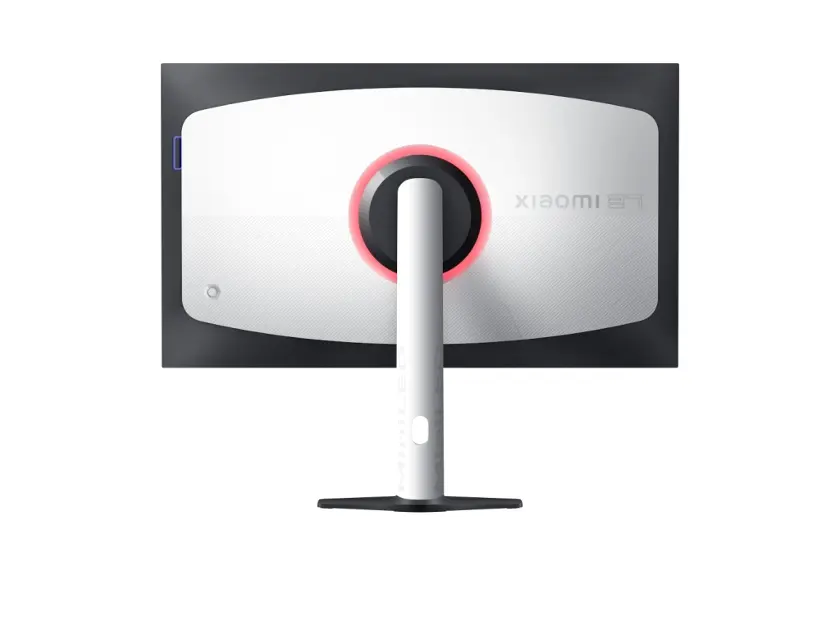
The 180Hz refresh rate with Fast IPS panel achieves the fast pixel switching that conventional IPS panels cannot match at this refresh rate without colour shift or backlight bleed artifacts. 1ms GTG response time with Overdrive enabled. FreeSync adaptive sync eliminates screen tearing and stutter by synchronising the display refresh rate to the GPU’s actual frame output rate over the active frame range. Game overlay features include a crosshair overlay (multiple sizes for different combat ranges) and dark-area enhancement (brightens shadowed game areas to reveal hidden enemies without blowing out bright areas). Joystick OSD navigation. RGB backlight effects. Retractable headphone holder built into the stand. Full ergonomic stand: height adjustment 0–120mm, tilt −5°/+21°, swivel ±35°, portrait pivot ±92°. VESA 75×75mm wall mount (bracket sold separately). Connectivity: HDMI 2.0 ×2 + DP 1.4 ×2 + DC-IN + 3.5mm audio output. Power 65W / 24V⎓2.71A. Dimensions with stand 613.3×521.2×227.3mm. Weight with stand 6.0kg. 2-year warranty.
Specifications
| Brand | Xiaomi |
| Monitor Screen Size | 27" |
| Screen Refresh Rate | 180 Hz |
| Technology Type | FreeSync / DisplayHDR 1000 |
| Brightness (Nits) | 800 cd/m² |
| Resolution | QHD (2560 × 1440) |